Are Ghosts Real? — Evidence Has Not Materialized
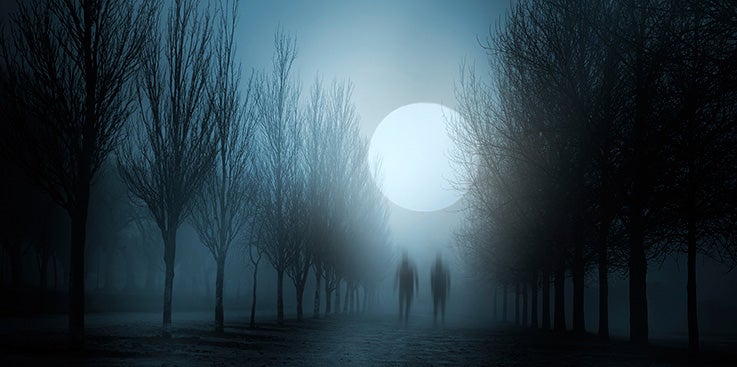
If you believe in ghosts, you're not alone. Cultures all around the world believe in spirits that survive death to live in another realm. In fact, ghosts are among the most widely believed of paranormal phenomenon: Millions of people are interested in ghosts, and a 2013 Harris Poll found that 43% of Americans believe in ghosts.
The idea that the dead remain with us in spirit is an ancient one, appearing in countless stories, from the Bible to "Macbeth." It even spawned a folklore genre: ghost stories. Belief in ghosts is part of a larger web of related paranormal beliefs, including near-death experience, life after death, and spirit communication. The belief offers many people comfort — who doesn't want to believe that our beloved but deceased family members aren't looking out for us, or with us in our times of need?
People have tried to (or claimed to) communicate with spirits for ages; in Victorian England, for example, it was fashionable for upper-crust ladies to hold séances in their parlors after tea and crumpets with friends. Ghost clubs dedicated to searching for ghostly evidence formed at prestigious universities, including Cambridge and Oxford, and in 1882 the most prominent organization, the Society for Psychical Research, was established. A woman named Eleanor Sidgwick was an investigator (and later president) of that group, and could be considered the original female ghostbuster. In America during the late 1800s, many psychic mediums claimed to speak to the dead — but were later exposed as frauds by skeptical investigators such as Harry Houdini.
It wasn't until recently that ghost hunting became a widespread interest around the world. Much of this is due to the hit Syfy cable TV series "Ghost Hunters," now in its second decade of not finding good evidence for ghosts. The show spawned dozens of spinoffs and imitators, and it's not hard to see why the show is so popular: the premise is that anyone can look for ghosts. The two original stars were ordinary guys (plumbers, in fact) who decided to look for evidence of spirits. Their message: You don't need to be an egghead scientist, or even have any training in science or investigation. All you need is some free time, a dark place, and maybe a few gadgets from an electronics store. If you look long enough any unexplained light or noise might be evidence of ghosts.
2.
If you believe in ghosts, you're not alone. Cultures all around the world believe in spirits that survive death to live in another realm. In fact, ghosts are among the most widely believed of paranormal phenomenon: Millions of people are interested in ghosts, and a 2013 Harris Poll found that 43% of Americans believe in ghosts.
The idea that the dead remain with us in spirit is an ancient one, appearing in countless stories, from the Bible to "Macbeth." It even spawned a folklore genre: ghost stories. Belief in ghosts is part of a larger web of related paranormal beliefs, including near-death experience, life after death, and spirit communication. The belief offers many people comfort — who doesn't want to believe that our beloved but deceased family members aren't looking out for us, or with us in our times of need?
People have tried to (or claimed to) communicate with spirits for ages; in Victorian England, for example, it was fashionable for upper-crust ladies to hold séances in their parlors after tea and crumpets with friends. Ghost clubs dedicated to searching for ghostly evidence formed at prestigious universities, including Cambridge and Oxford, and in 1882 the most prominent organization, the Society for Psychical Research, was established. A woman named Eleanor Sidgwick was an investigator (and later president) of that group, and could be considered the original female ghostbuster. In America during the late 1800s, many psychic mediums claimed to speak to the dead — but were later exposed as frauds by skeptical investigators such as Harry Houdini.
It wasn't until recently that ghost hunting became a widespread interest around the world. Much of this is due to the hit Syfy cable TV series "Ghost Hunters," now in its second decade of not finding good evidence for ghosts. The show spawned dozens of spinoffs and imitators, and it's not hard to see why the show is so popular: the premise is that anyone can look for ghosts. The two original stars were ordinary guys (plumbers, in fact) who decided to look for evidence of spirits. Their message: You don't need to be an egghead scientist, or even have any training in science or investigation. All you need is some free time, a dark place, and maybe a few gadgets from an electronics store. If you look long enough any unexplained light or noise might be evidence of ghosts.
LINK:
https://www.livescience.com/26697-are-ghosts-real.htmlhttps://www.livescience.com/26697-are-ghosts-real.html
2.
3.
2.
Are Ghosts Real?
Ghosts are a particular manifestation of a belief in life after death. Though the specifics vary among groups, a ghost is generally understood to be the disembodied spirit or soul of a once-living person. Sometimes the spirit belongs to a deceased animal.
A ghost is said to linger on earth when the person died in a traumatic way, or when his burial ritual was disturbed before it was complete, or sometimes just because the spirit feels like it. Pesky or disruptive ghosts are called poltergeists. Some groups believe that ghosts are actually demons, or evil angels.
Not all belief systems around the world allow for spirits or souls that linger on earth after death, but some do. In fact, many do. The concept is popular in spiritualist circles and many Christian faiths as well. With so many theologies that allow for an immediate spiritual life after death, it is no wonder that ghosts are so popular.
In fact, ghosts are not limited to the realm of the religious. Because they cross social, cultural, and religious lines, ghosts are very popular in movies, novels, and other pop culture manifestations. Ghosts are gaining in popularity as the 21st century wears on.
Luckily for those who prefer not to guess, the truth about death reveals the facts about ghosts as well. This knowledge takes away the guessing and plainly reveals what to safely believe in and what not to. Please enter the site to learn more.
A ghost is said to linger on earth when the person died in a traumatic way, or when his burial ritual was disturbed before it was complete, or sometimes just because the spirit feels like it. Pesky or disruptive ghosts are called poltergeists. Some groups believe that ghosts are actually demons, or evil angels.
Not all belief systems around the world allow for spirits or souls that linger on earth after death, but some do. In fact, many do. The concept is popular in spiritualist circles and many Christian faiths as well. With so many theologies that allow for an immediate spiritual life after death, it is no wonder that ghosts are so popular.
In fact, ghosts are not limited to the realm of the religious. Because they cross social, cultural, and religious lines, ghosts are very popular in movies, novels, and other pop culture manifestations. Ghosts are gaining in popularity as the 21st century wears on.
Luckily for those who prefer not to guess, the truth about death reveals the facts about ghosts as well. This knowledge takes away the guessing and plainly reveals what to safely believe in and what not to. Please enter the site to learn more.
3.
The Mystery of Death
Any study of the nature of death begs an important foundational question: Why must things die in the first place?
Indeed, death is a grand mystery. Throughout time, every major religion, philosophy, and spiritual train of thought has sought to explain this mystery. It is a subject that touches the life of every man and woman, uniting the entire human race under a cloud of inevitable mortality. The rich and the poor alike meet the same end; the black and the white both go to the grave; the powerful and the humble all leave this planet eventually.
Interestingly, scientific research into single-celled organisms reveals that the nature of life, on a cellular level, does not automatically include a self-destruct mechanism for death. In other words, it appears that death is an unnatural part of life. Yet despite this, everything on earth eventually dies.
Many lines of religious thought simply accept the inevitability of death and instead try to offer better alternatives that await the faithful in the afterlife. These ideas bring comfort to many people who have lost loved ones or are facing death themselves, but they leave others wondering, “Why must death exist? Wouldn’t an all-powerful God eradicate death? Shouldn’t all life inherently live forever?”
So the question of the nature of death also brings profound implications about the nature of God. Maybe, some reason, God is not as powerful as He says, since the problem of death remains. Maybe God numbs our sensibilities after death, if we are promised happiness in paradise despite the horrors unfolding on our loved ones who are still alive. Maybe, if living a bad life truly results in eternal torment afterward, God is not really as loving as so many people claim. Maybe there are actually many pathways to God, or many such gods, and the mystery of death will be solved differently for each person, depending on their philosophies in life. Maybe there is no such thing as death, but instead a continual rebirth through reincarnation. Maybe, according to a train of thought that has grown in popularity since the 19th century, life is nothing more than a biochemical accident, and death brings with it a never-ending state of nothingness; the most common conclusion drawn from this line of thinking is that there is no God at all.
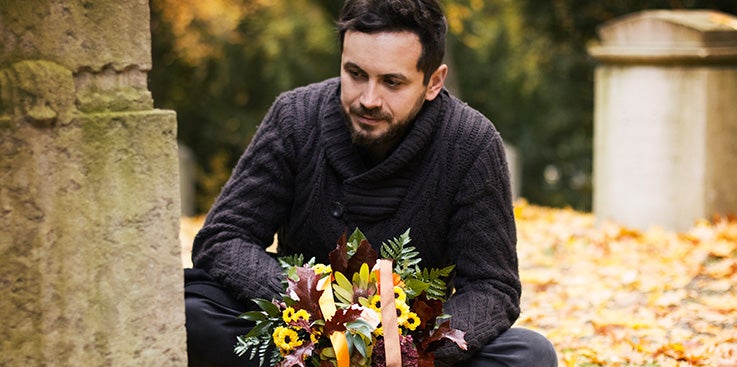
The mystery of death is so profound that, despite the millennia of religious doctrine, mythology, scientific research, and the many theories and explanations that exist on the subject, people today are more confused than ever about it. Even within individual religious groups there is often a stark difference of opinion on the nature of death. To see this, walk around a cemetery and note the different inscriptions on the tombstones.
Clearly, the only way to decipher this profound mystery is to find an authoritative source of truth that will expose all error and remove the need for speculation. Are we fortunate enough to have such an authority? We believe so.
Indeed, death is a grand mystery. Throughout time, every major religion, philosophy, and spiritual train of thought has sought to explain this mystery. It is a subject that touches the life of every man and woman, uniting the entire human race under a cloud of inevitable mortality. The rich and the poor alike meet the same end; the black and the white both go to the grave; the powerful and the humble all leave this planet eventually.
Interestingly, scientific research into single-celled organisms reveals that the nature of life, on a cellular level, does not automatically include a self-destruct mechanism for death. In other words, it appears that death is an unnatural part of life. Yet despite this, everything on earth eventually dies.
Many lines of religious thought simply accept the inevitability of death and instead try to offer better alternatives that await the faithful in the afterlife. These ideas bring comfort to many people who have lost loved ones or are facing death themselves, but they leave others wondering, “Why must death exist? Wouldn’t an all-powerful God eradicate death? Shouldn’t all life inherently live forever?”
So the question of the nature of death also brings profound implications about the nature of God. Maybe, some reason, God is not as powerful as He says, since the problem of death remains. Maybe God numbs our sensibilities after death, if we are promised happiness in paradise despite the horrors unfolding on our loved ones who are still alive. Maybe, if living a bad life truly results in eternal torment afterward, God is not really as loving as so many people claim. Maybe there are actually many pathways to God, or many such gods, and the mystery of death will be solved differently for each person, depending on their philosophies in life. Maybe there is no such thing as death, but instead a continual rebirth through reincarnation. Maybe, according to a train of thought that has grown in popularity since the 19th century, life is nothing more than a biochemical accident, and death brings with it a never-ending state of nothingness; the most common conclusion drawn from this line of thinking is that there is no God at all.
The mystery of death is so profound that, despite the millennia of religious doctrine, mythology, scientific research, and the many theories and explanations that exist on the subject, people today are more confused than ever about it. Even within individual religious groups there is often a stark difference of opinion on the nature of death. To see this, walk around a cemetery and note the different inscriptions on the tombstones.
Clearly, the only way to decipher this profound mystery is to find an authoritative source of truth that will expose all error and remove the need for speculation. Are we fortunate enough to have such an authority? We believe so.
LINK:
Comments
Post a Comment